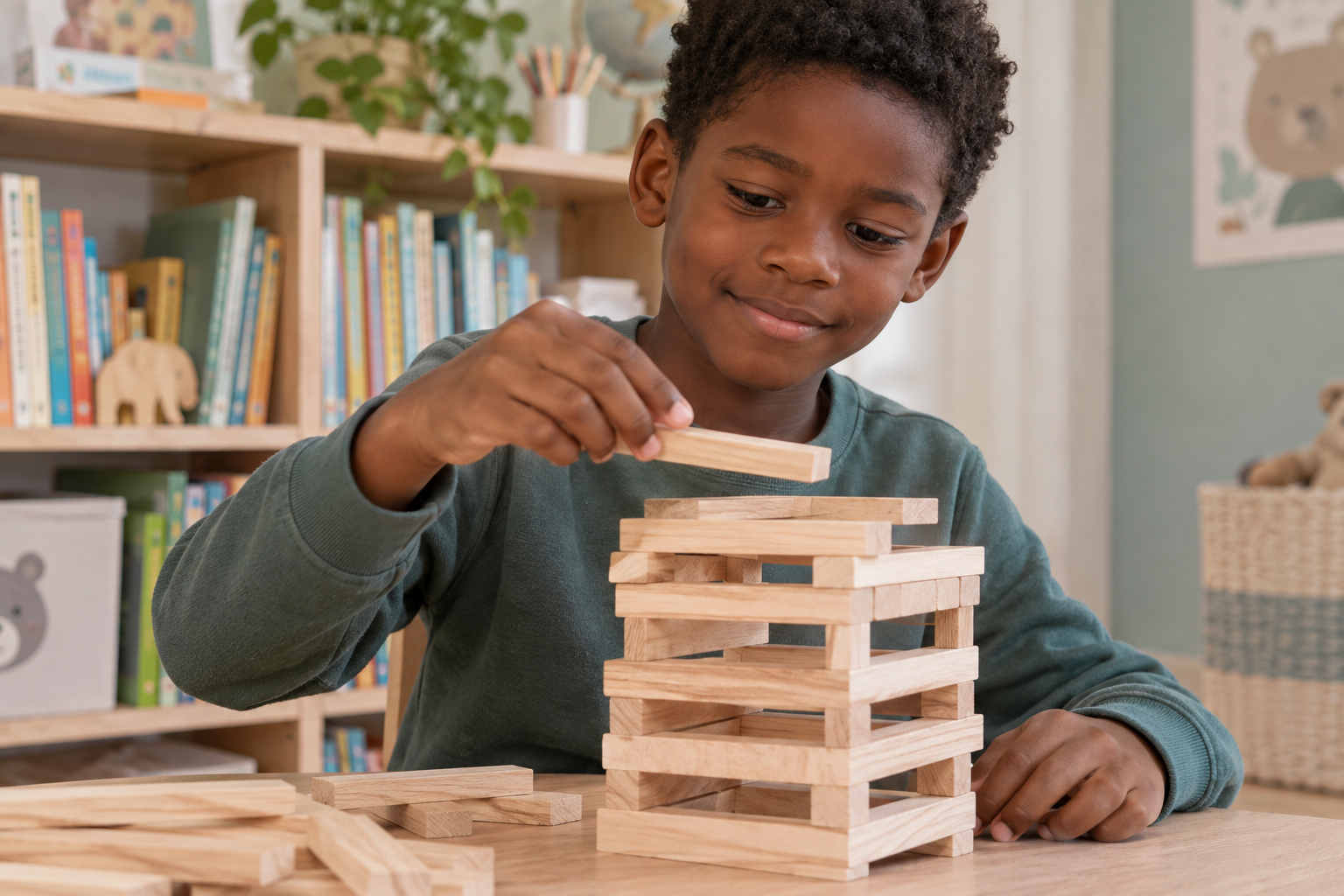
When you have a Kapla set at home, you are itching to get it out on a Wednesday or at the weekend, in short whenever you have a spare moment to see the children building (only to knock it all down an hour later!) all sorts of models.
It isn’t always easy to know from what age you can give Kapla so that they are of real use or at least relevant. Here at Kaplea, we start from the principle that we are not going to offer the same experience with Kapla to a 2-year-old and a 6-year-old.
So the question is: how do you adapt the activity to your child’s age so that it is genuinely an enriching experience? And which product suits each age or need best?
With my four nephews aged 2, 4 and 6 (yes, there are twins among them!), I have seen just how differently each age group experiences Kapla, according to their own abilities. Which is how the guide below came about!
The minimum age for playing with Kapla: “officially” from age 2
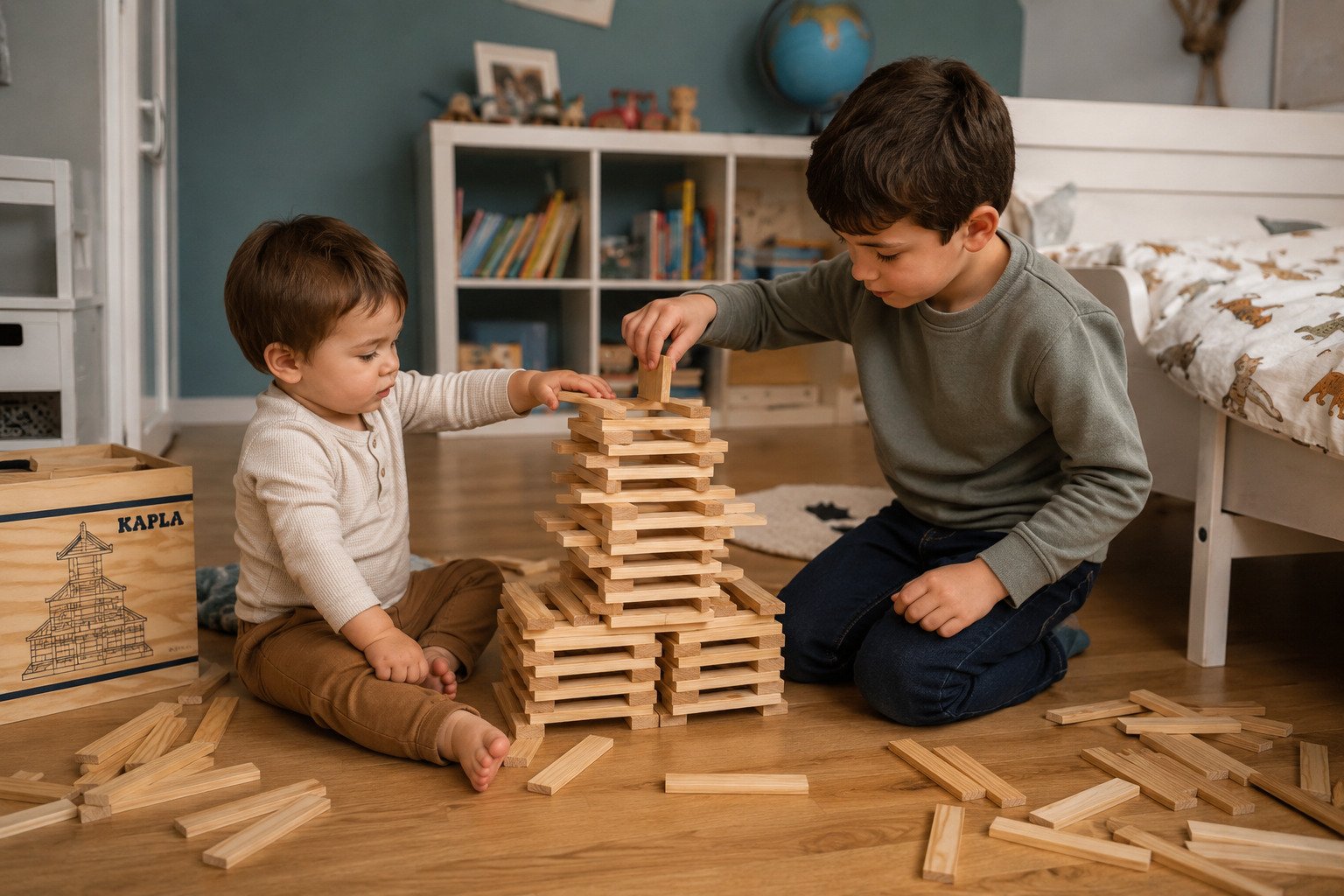
According to the Kapla company, the minimum age recommended for playing with Kapla is 2 years old. Even though this is the brand’s official recommendation, we think it is a little young, except for developing motor skills.
At this age or earlier, a child is not yet able to ensure the precision of their fine motor skills needed to handle these small planks of Landes pine (we appreciate the French quality!).
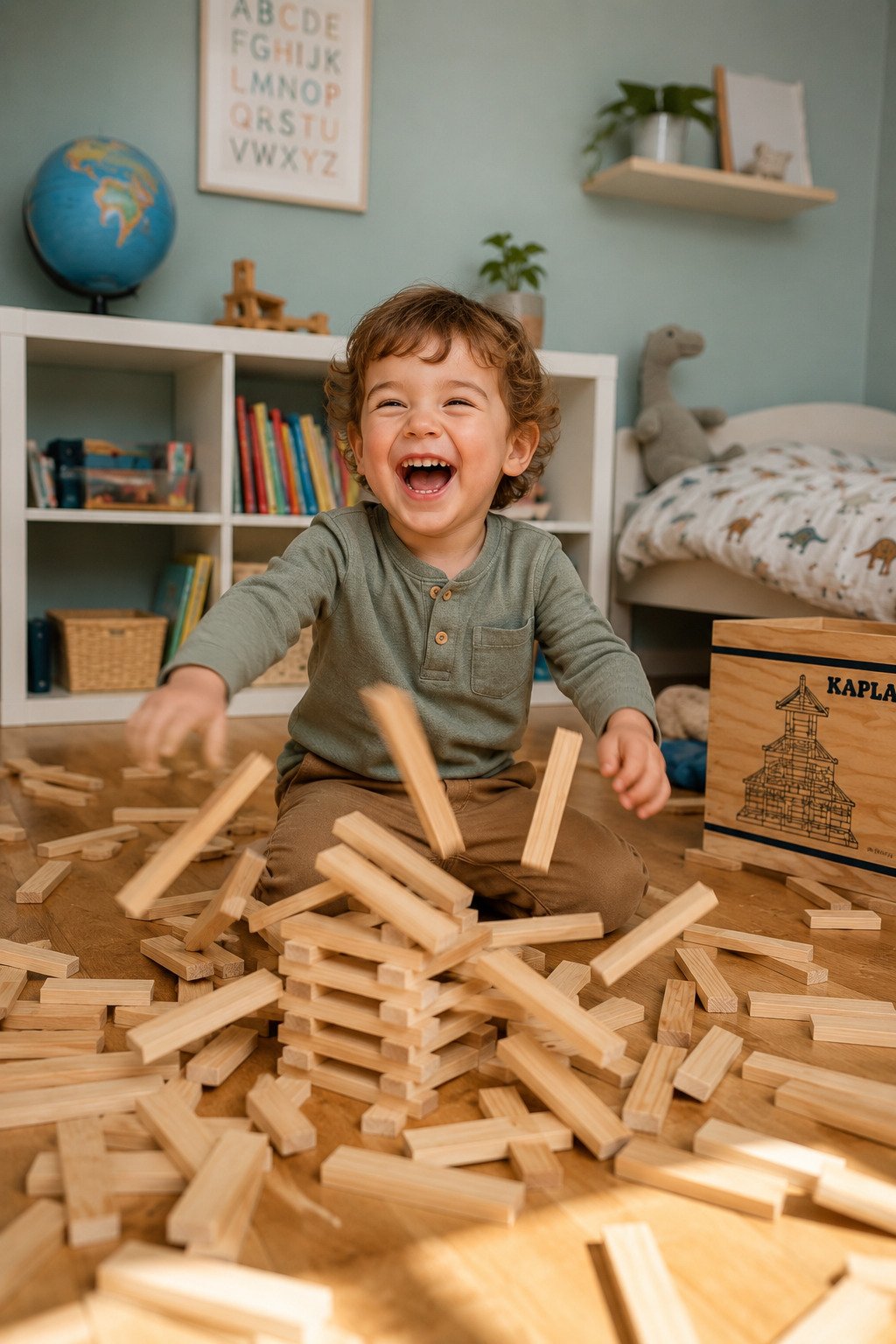
At 2, there are no elaborate structures or builds, as you would expect: what matters is handling, the feel of the material, the joy of laying one plank on another… and of knocking it all down, laughing along the way!
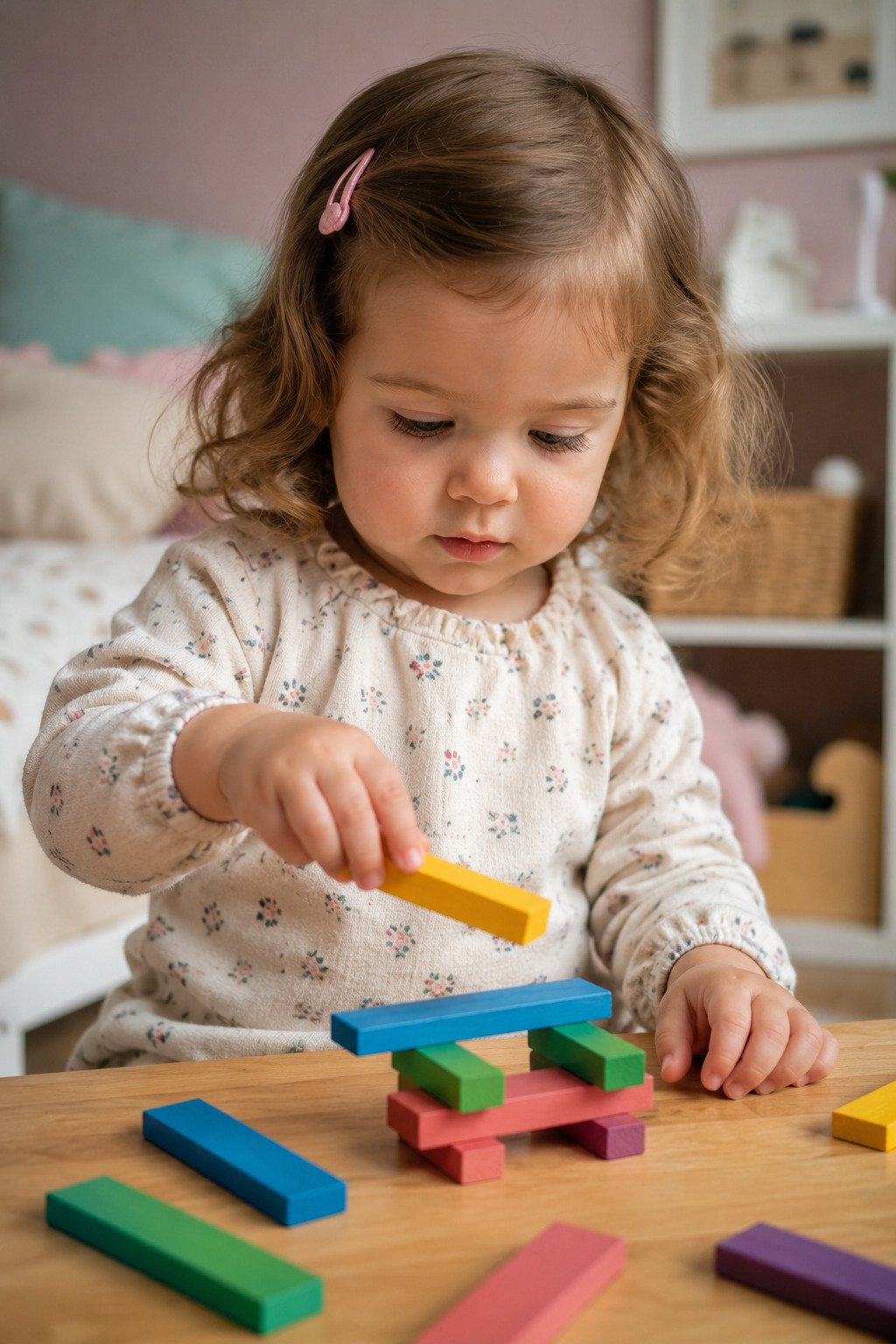
Coloured Kapla, within reach from age 2
For young children from age two, it is a shame that Kapla does not offer a dedicated range with planks that are wider and perhaps a little heavier than the classic ones, which would have the advantage of being easier for small hands to grip and surely less risky too.
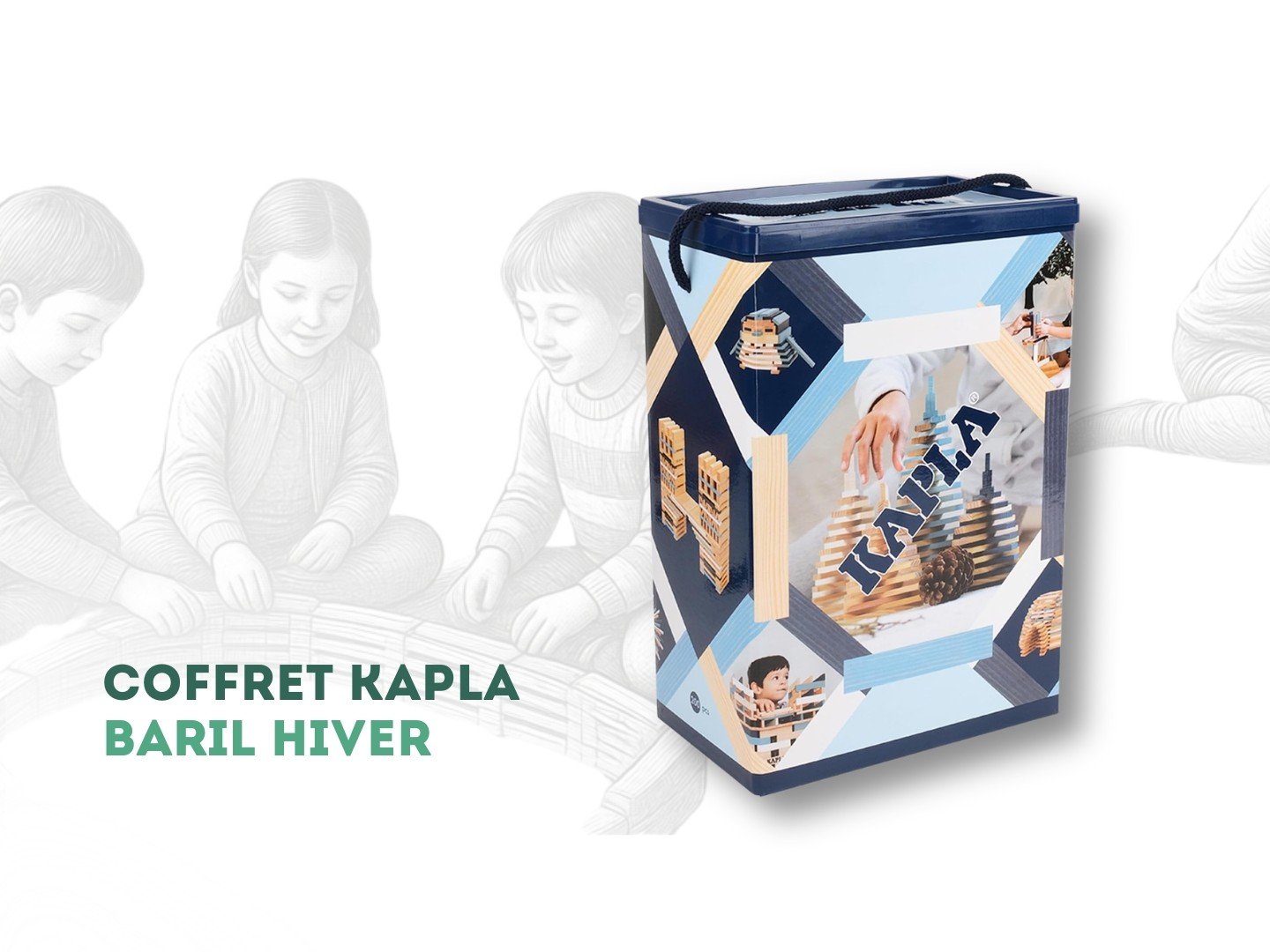
That said, we find the coloured Kapla make a good way into the world of Kapla, letting little ones have their first building experience in complete safety, with colours to keep them amused.
Discover coloured Kapla on Amazon →
Kapla and age: our tips by age range
2–3 years: exploring, stacking, knocking down
At this age, a child is in a phase of exploring with all their senses. Kapla are an intriguing object for them: smooth, light, and they make a lovely tapping sound when set down on another one. You don’t build as such, you experiment.
Here are a few activities to try with a 2- to 3-year-old:
The stacking of a few planks into a simple tower, which the child is left to knock down (this step is often the favourite one!).
The lining up of planks flat to make a road or a path.
Naming actions together: “we put it down”, “we stack”, “it falls”…
Playing side by side, each with their own planks, with no aim of building anything
Building a small Kapla stack of matching colours together.
What all these little games do: they develop fine motor skills, hand-eye coordination, the idea of cause and effect, and the first notions of height and balance.
Between 4 and 5, real building begins
It is often from age 4 that Kapla really comes into its own. Your child starts to have a project in mind before building — a house, a boat, a castle. They will look for ideas, ask for help with the harder parts, and feel genuine pride in front of the finished work!
This is exactly the age we designed our step-by-step sheets on Kaplea: simple and easy, with clear visual steps, for children who are starting to build with intent. You can start with 2D models to make first builds easier.
Possible activities with a 4- to 5-year-old are the following:
Building from an easy step-by-step model (house, simple bridge, boat)
Letting the child build from their imagination and ask them to explain it,
Setting each other small challenges: “can we manage a taller tower than yesterday?”
Mixing Kapla with other toys (toy cars, figurines) for even richer stories
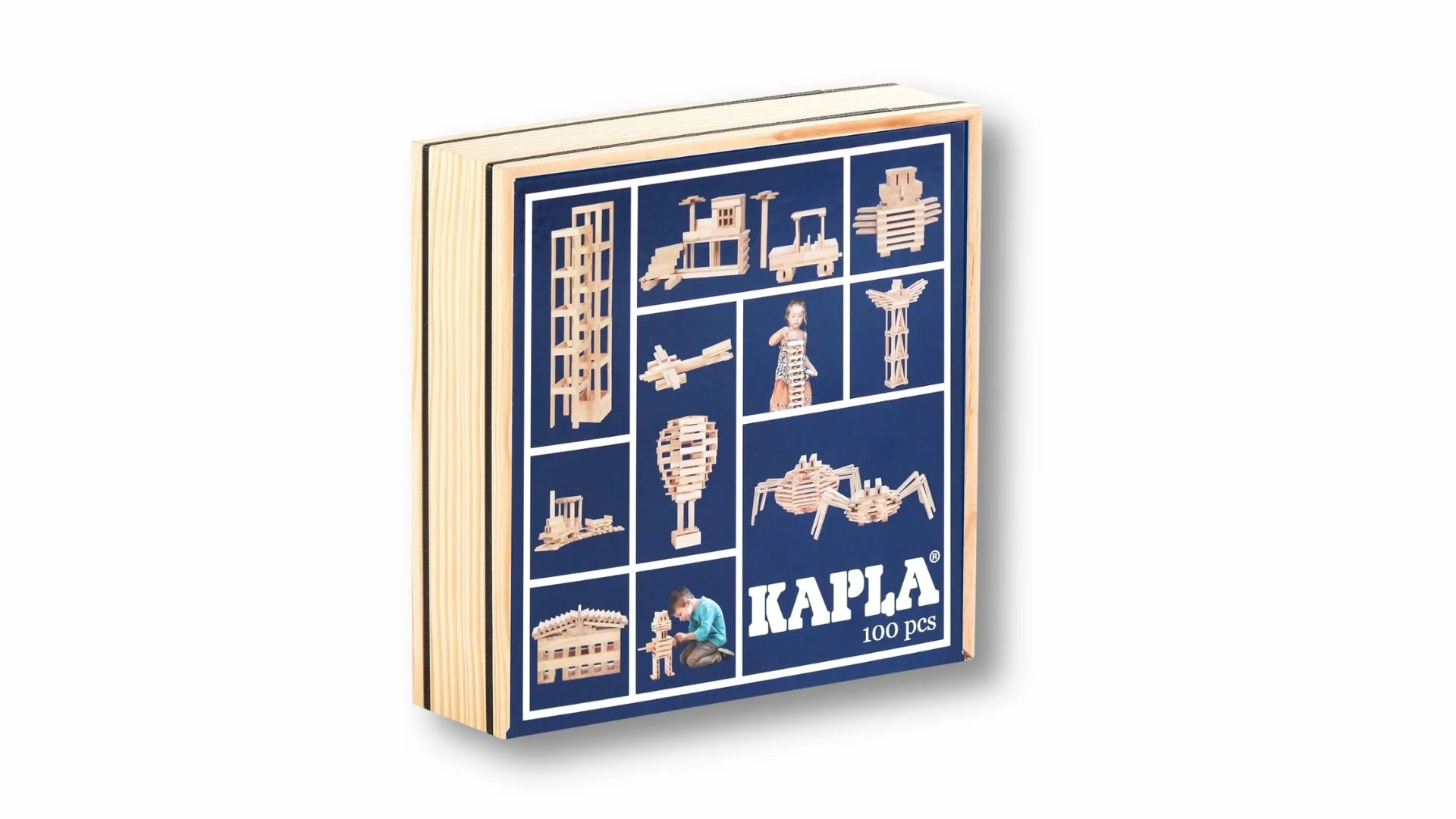
KAPLA - Box of 100 wooden planks - Natural
The 100-plank Kapla barrel is the size we recommend for starting out: enough planks to build interesting characters, but not so many that you drown in them. The 100-piece Kapla models are designed for exactly this size, offering approachable building ideas and detailed sheets.
36,00 €
View on AmazonWhat it develops: planning, patience, perseverance, creativity, simple problem-solving and the pride of getting something done.
6 and up: challenges and complexity
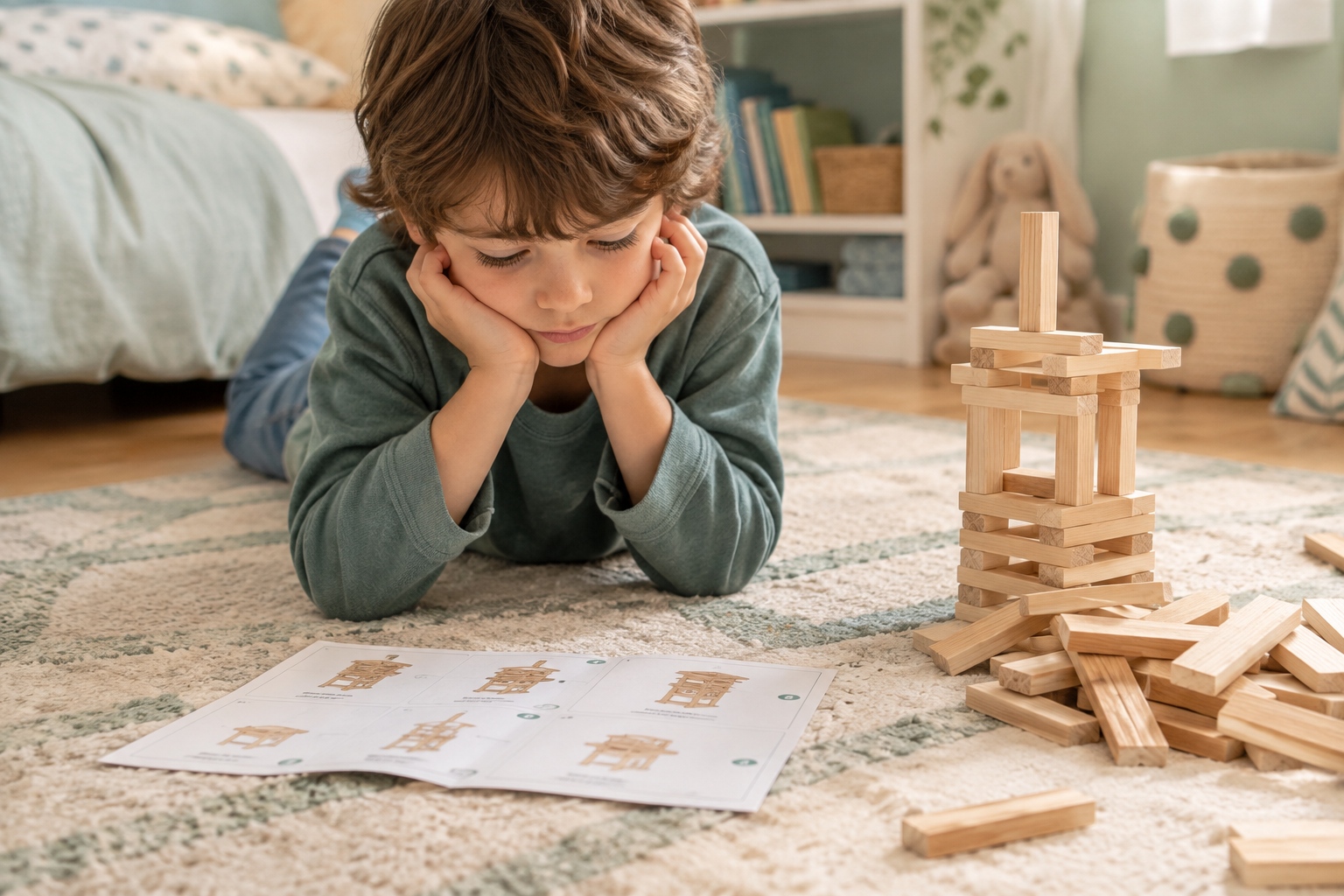
From age 6, playing with Kapla enters a new dimension. A child can follow more complex plans, understand builds made of several layers, and test hypotheses (why does it hold? how do we stop it falling?). It is also the age at which Kapla challenges really come into their own.
Here is what you can do from age 6:
You can tackle intermediate or hard models: the Eiffel Tower, a marble run, a castle
You can challenge each other against the clock, solo or in teams
You can put up buildings while thinking about how the structure balances
You can use the Kapla 3D modeller to preview a model before building it.
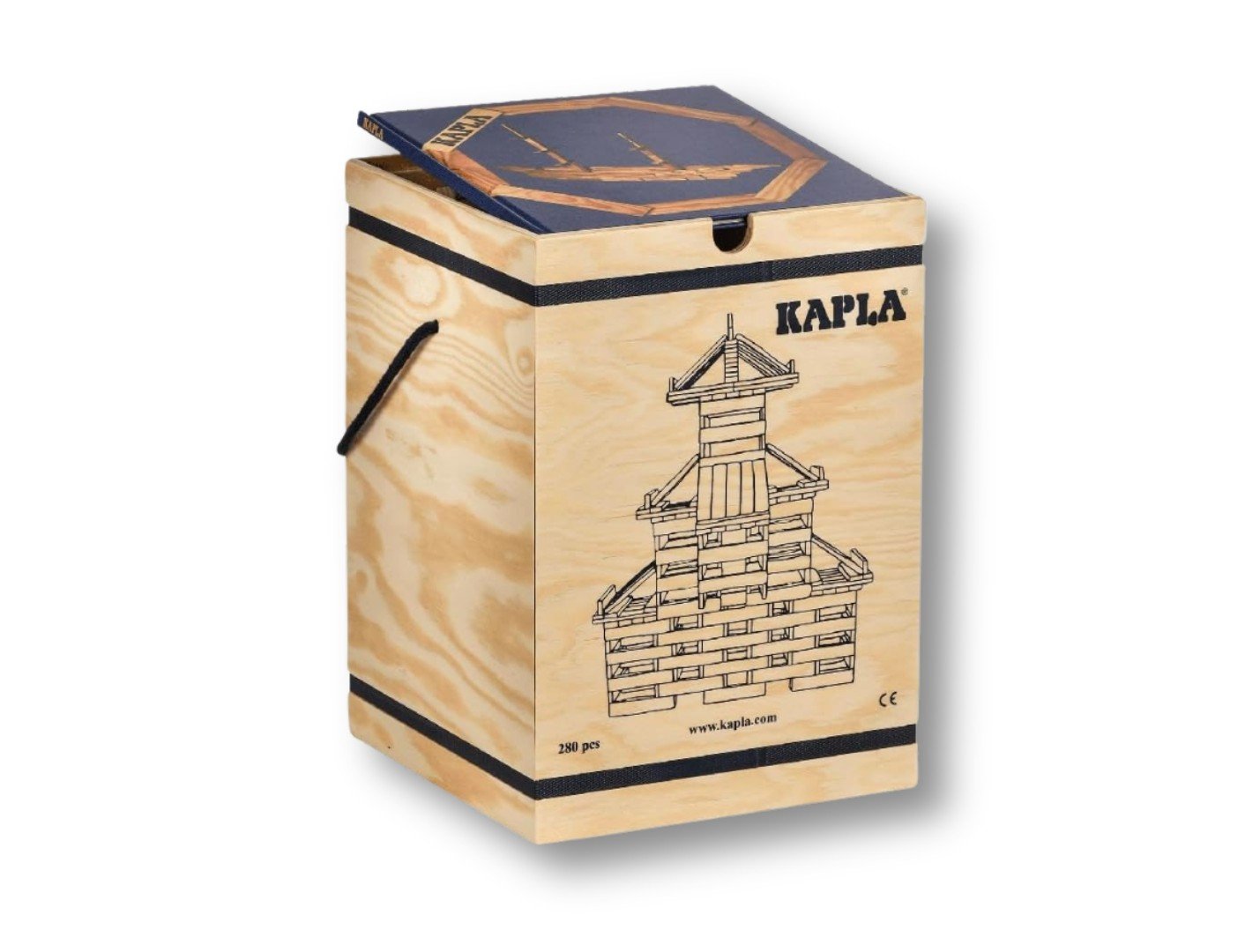
Kapla with art book
This Kapla set contains 280 wooden planks, perfect for big builds. It also comes with a Kapla-brand art book, which gives children plenty of inspiration.
99,00 €
View on AmazonAnd of course, then there are us, the grown-up children, for whom our imagination is the limit!