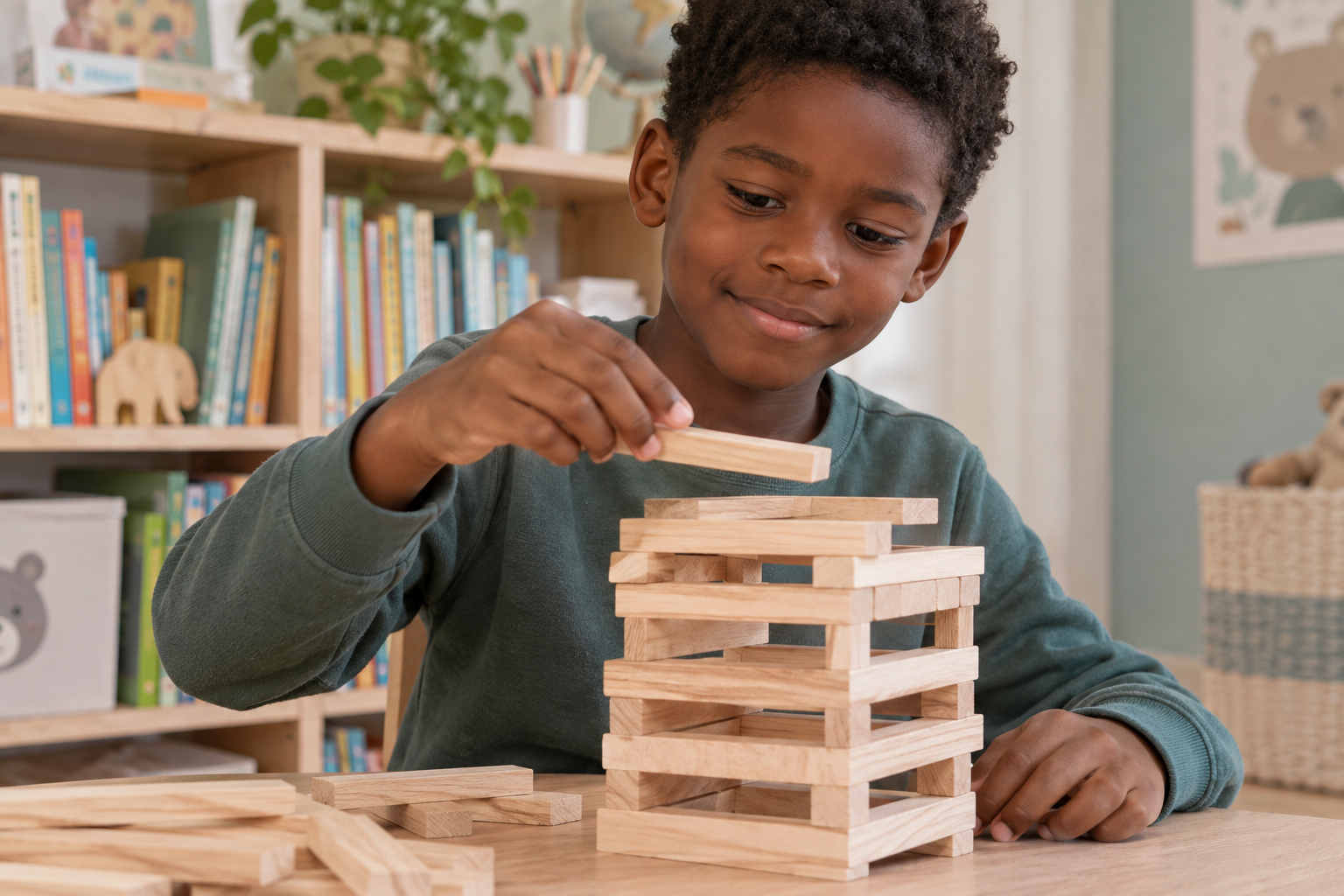
Between a tablet that grabs attention in seconds but in front of which the child is passive, and wooden planks like Kapla, which call for patience and perseverance, the choice for the child's well-being looks obvious.
But why is playing with wood so good for development for our children? Here is the picture, with the sources to back it up!
Why wood is a material apart when it comes to play
Wooden toys have been around for generations and were mostly what our parents or grandparents played with. Yet with the place screens and digital games now hold in our children's lives from the earliest age, they have never been more essential. Touching, feeling, stacking, building: wooden building toys call on the whole body of the child, not just their eyes.
A natural material that soothes
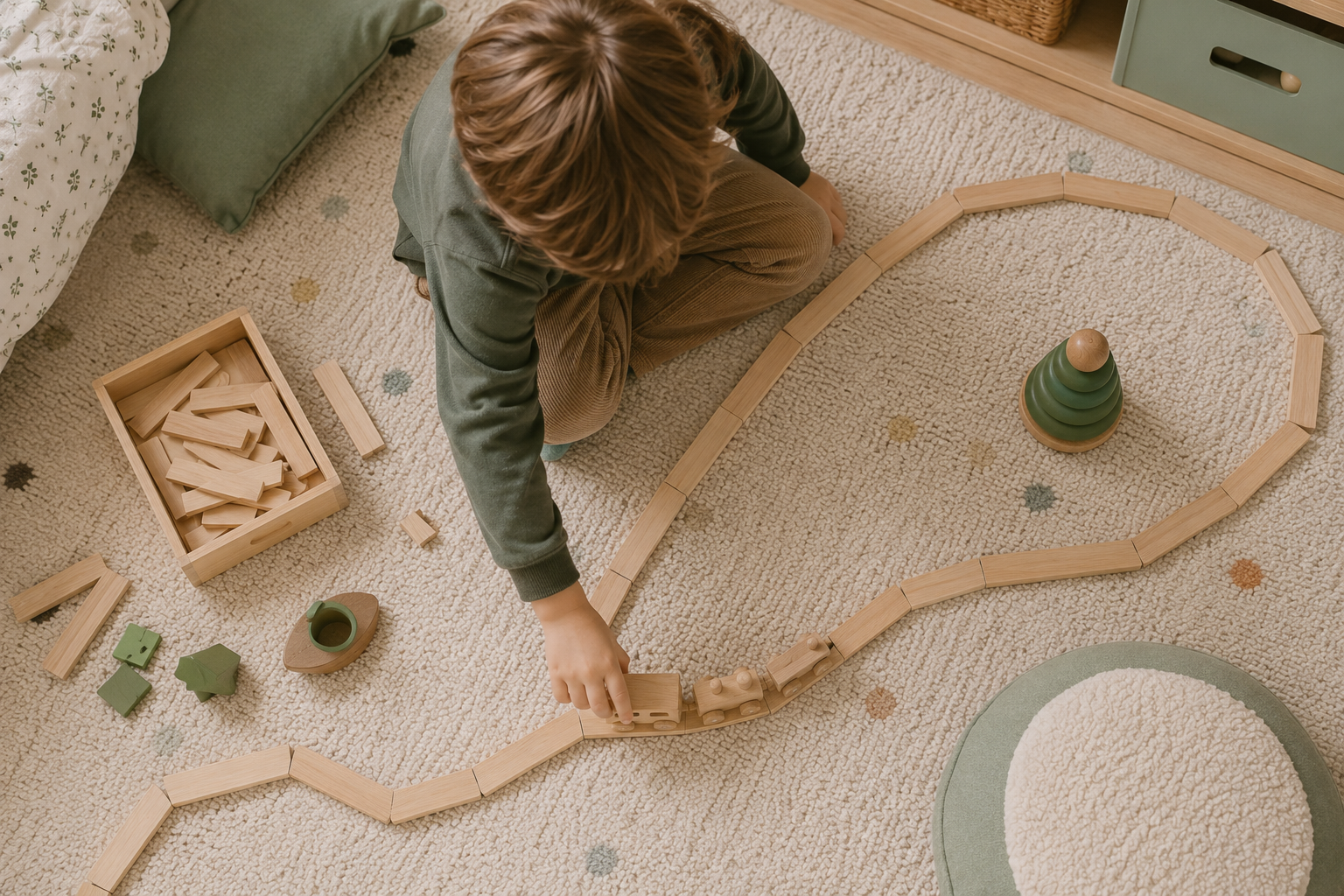
Wood is a living material. It holds warmth, it has a grain, a faint smell, a texture that varies from one piece to the next. Nothing like the smooth, cold plastic of mass-produced toys!
That sensory richness has a direct effect on the child: contact with natural materials encourages a state of calm and well-being, with research having shown that wood, as a natural material, can have a positive effect on health and mental well-being.
The feel of wood: a complete sensory awakening
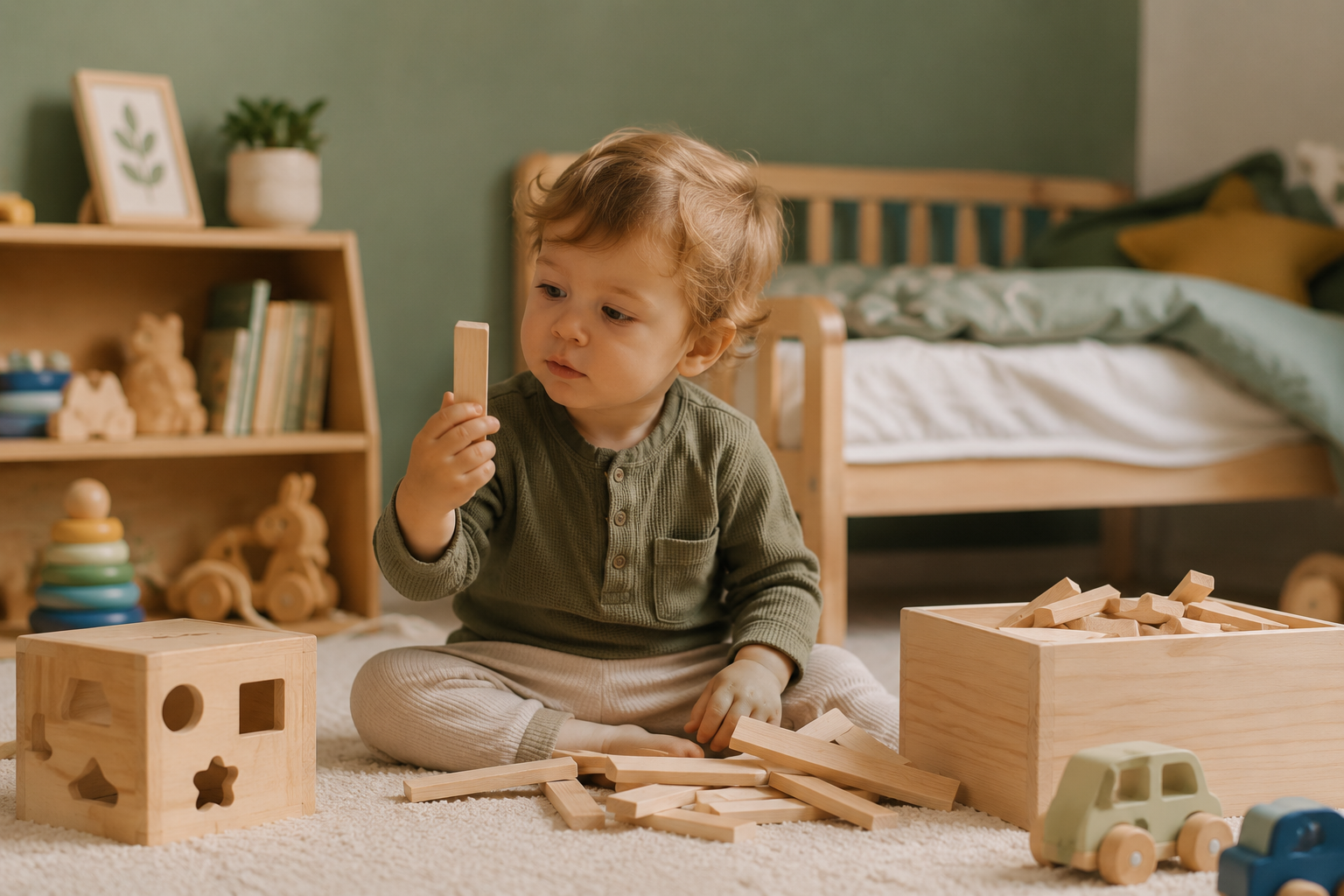
Playing with wood is far more than handling an object.
The sensory experience of touch, of taking in surface, shape, volume and weight, helps build complex neurological connections in a child's brain.
A wooden baby toy is therefore never “just” a toy: it is a genuine tool for early development.
And I find that not all wood is of equal quality! Having tried both the brand's own Kapla, made from Landes pine, and an imitation, I found a big difference in colour, in the smoother feel, and in the absence of any splinter risk.
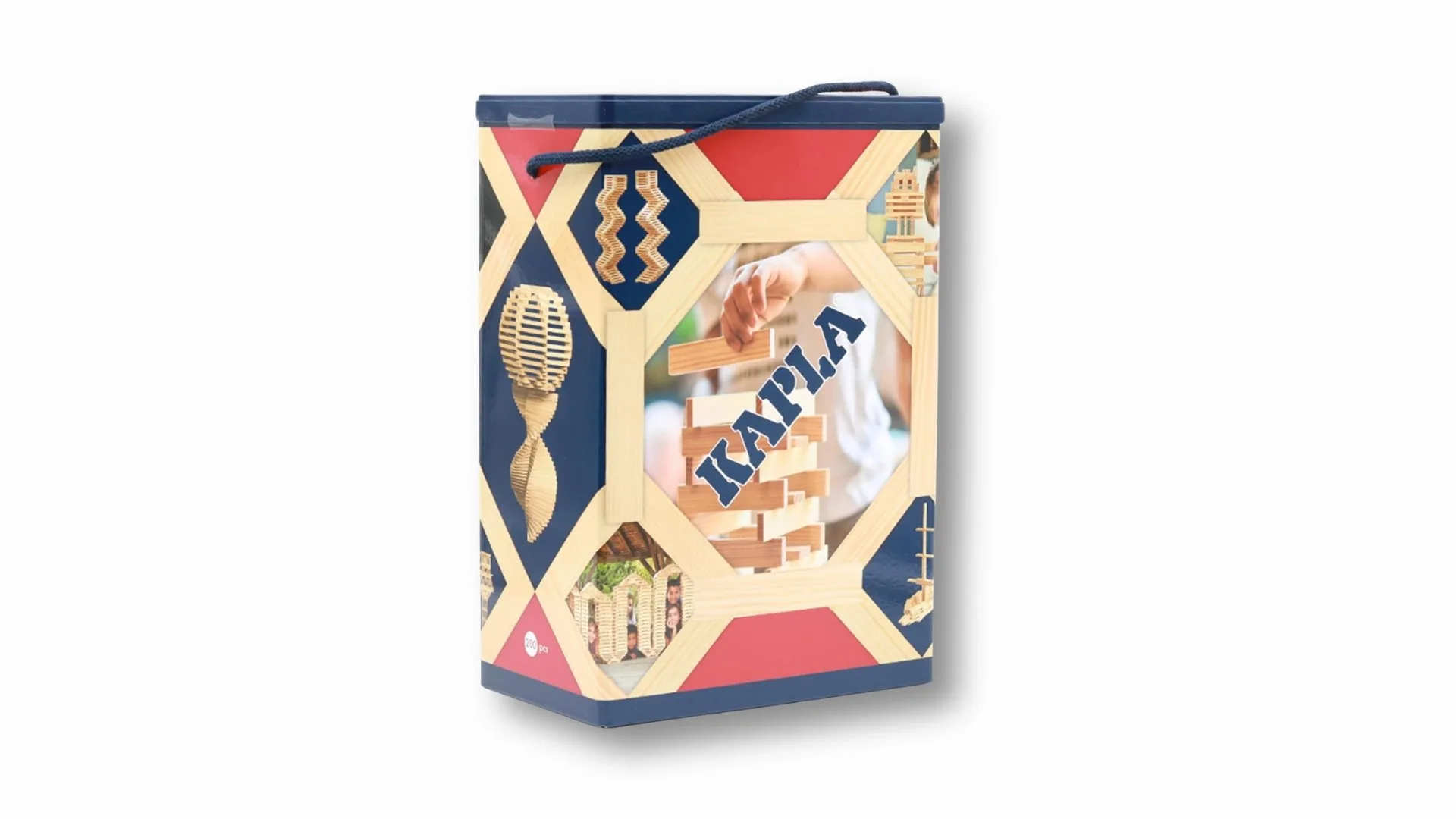
200-plank Kapla barrel
This barrel from Kapla is one of the most classic, because it covers most of the basic models. All 200 wooden pieces are made from Landes pine, with a smooth finish that is pleasant for small hands.
49,99 €
View on AmazonSoft colours for balanced senses
Unlike garish plastic toys and electronic ones that flash and beep (which can also over-solicit a child), bare or lightly tinted wood offers generally softer shades.
The muted yet vivid colours often used on wooden toys encourage visual stimulation without overwhelming the child. The result: less overstimulation, more concentration.
The sound of wood: a different sonic texture
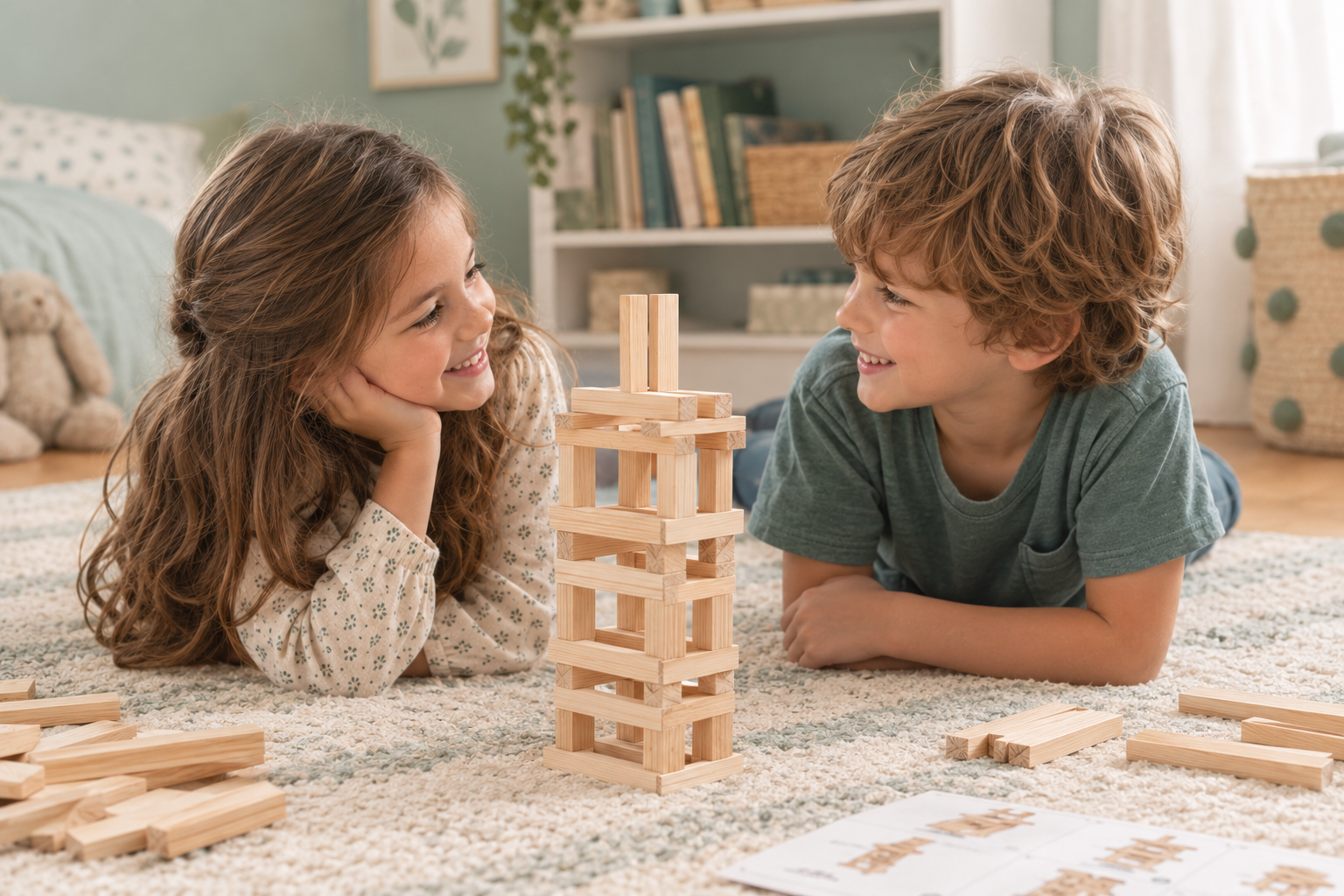
Two little logs knocking together, a tower coming down with a dull, muffled thud: wooden toys stimulate touch, sight and even hearing through the sounds they make in play, adding up to a complete sensory experience. It is a natural sound, never aggressive, a world away from digital beeps.
“When children use their senses to explore and handle materials, they build the skills they will need for school and beyond.” Melanie Koch, early childhood education specialist, Bumbutoys
Wooden toys and motor skills: a real development partner
The weight of wood works the grip
A wooden plank has real weight, unlike a hollow plastic piece. That detail matters enormously: in handling a small plank, a child improves their grip, and playing with wood offers plenty of chances to strengthen and develop fine motor skills.
Grasping, handling and moving wooden toys strengthens the muscles of the hands and fingers, which is natural preparation for writing or for tying shoelaces later on.
Gross motor skills and spatial coordination
Building a tower, balancing it, watching it hold or collapse: that is also excellent practice for hand-eye coordination and for finding your bearings in space. Taking part in tactile play with wooden toys improves a child's hand-eye coordination and spatial awareness, a skill that matters for everything they will learn at school.
Wooden toys vs screens: what the science says
The official recommendations on screen time
Health authorities are unanimous. The WHO advises against any screen exposure for children under 2, and limiting it to 1 hour a day between 2 and 5. In France, the Haut Conseil de la santé publique and the Académie nationale de médecine recommend no exposure before age 3 unless certain conditions are met, such as an adult being present during viewing. One more reason to bet on wooden toys rather than the tablet from the earliest age!
This is no small matter: in 2022, 62% of children aged 3 to 11 were already exposed daily to at least one type of screen according to Santé Publique France. Given that, putting physical play back at the centre of everyday life becomes a genuine public health issue.
Wood, a healthy alternative to plastic
Another weighty argument: what the toys are made of. Research carried out by the Technical University of Denmark identified 126 substances potentially harmful to children's health in plastic toys. Choosing wood is therefore also a choice for health and for the planet. TTS
How to choose wooden toys well
Bare or untreated wood: ideal for the very young, who still put toys in their mouths
Varied textures: smooth, raw, waxed, to multiply the sensations
Open-ended play, with no instructions imposed: wooden planks allow a thousand different builds, unlike a single-purpose toy
A toy suited to the age: bigger and simpler for a baby, smaller and more technical for an older child
Built to last: a real wooden building set gets handed down, it does not break within a month
FAQ: wooden toys and screens, your questions
Are wooden toys really better than plastic ones?
Yes, on several counts: they are healthier (fewer chemical substances), they last longer, and they offer a richer sensory experience for the child.
From what age should a child be given a wooden building set?
From the first months for suitable pieces (large, rounded), then from age 3 for finer wooden building sets such as Kapla-style planks.
Do wooden toys really replace screens?
Above all they offer a complementary activity, and a far richer one in sensory and motor terms. The aim is not to ban screens outright, but to favour free play, particularly before age 3.
Why does the weight of a wooden toy matter for a child's development?
A heavier toy calls more on the grip and on the muscles of the hand, which prepares the fine movements involved in writing.
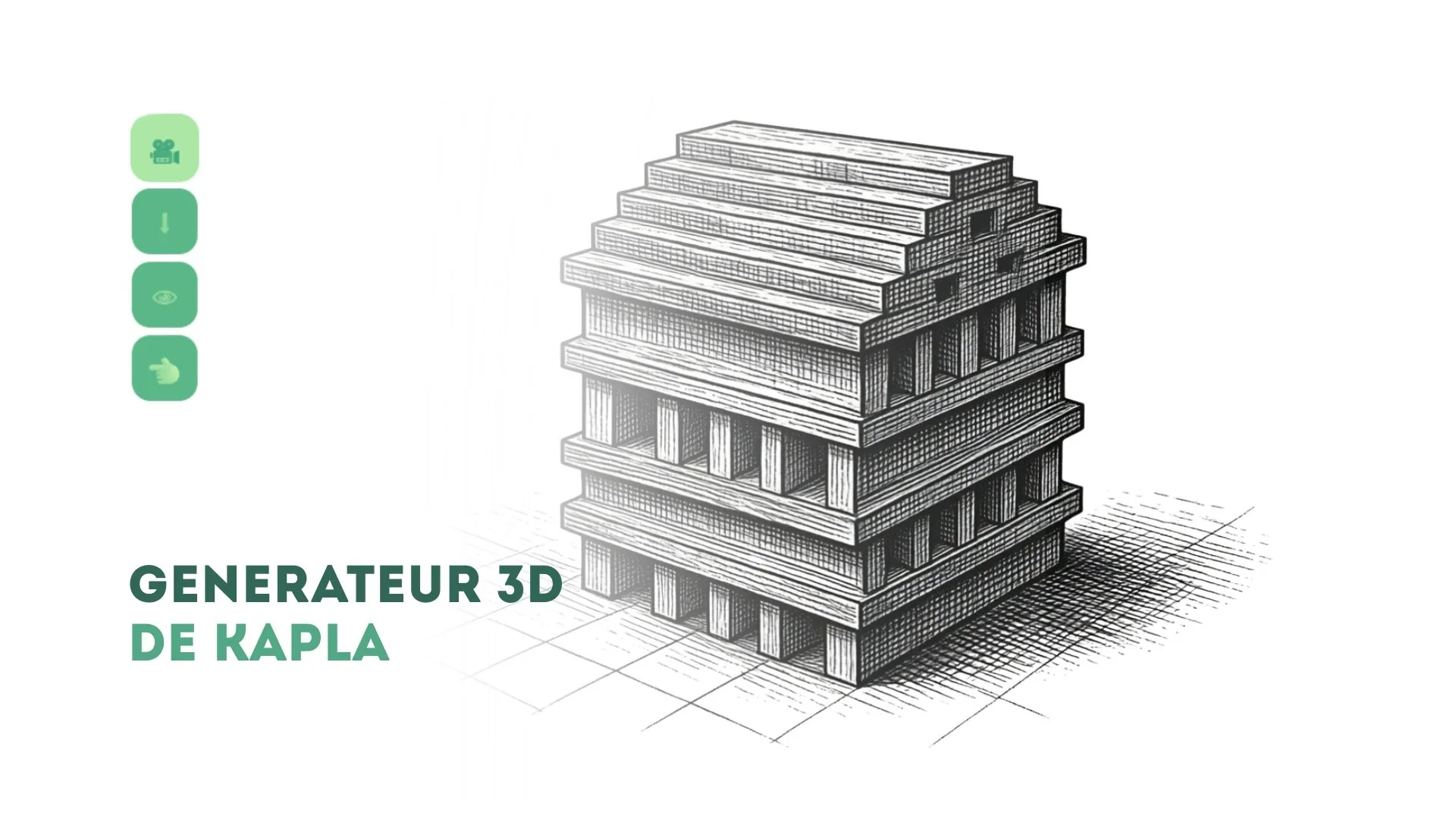
Kapla wooden models in 3D!
Fancy trying wooden play with your child? Discover our models to build and our 3D generator to dream up a creation of your own!